Fracture Modelling
Fracture Modelling
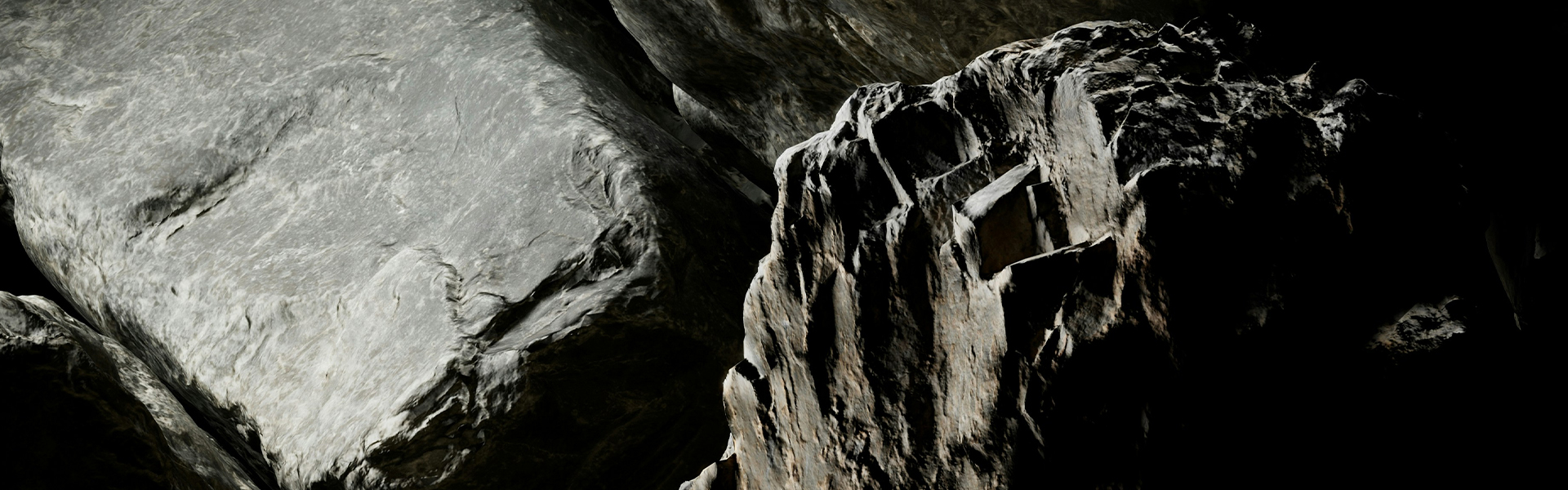
The Fracture Modelling module uses deformation calculated at incremental time steps as proxies to model fracture development and system properties through time. It combines sequential restoration and forward modelling to link observed fractures with modelled deformation, helping identify the causes of fracturing and build geologically realistic DFN models.
This enables prediction into areas without direct observations using geological proxies, including static and dynamic attributes. The module is a key tool for geoscientists working in fractured rock settings, supporting critical decisions in reservoir simulation, gas storage, fracking, mining and geotechnical engineering.
Fracture Modelling
The Fracture Modelling module uses deformation calculated at incremental time steps as proxies to model fracture development and system properties through time. It combines sequential restoration and forward modelling to link observed fractures with modelled deformation, helping identify the causes of fracturing and build geologically realistic DFN models.
This enables prediction into areas without direct observations using geological proxies, including static and dynamic attributes. The module is a key tool for geoscientists working in fractured rock settings, supporting critical decisions in reservoir simulation, gas storage, fracking, mining and geotechnical engineering.
Fracture Modelling
Use stress and strain values derived from the 3D Kinematic Modelling or Geomechanical Modelling modules, and static attributes such as curvature, as proxies for fracture intensity and orientation.
Use multiple direct inputs such as: well or borehole data, field and underground measurements to constrain the Discrete Fracture Network (DFN).
Various fracture types can be modelled, including those due to exhumation, thermal contraction, compaction and tectonic deformation (faulting and folding).
Use theoretical models derived from restoration or forward modelling to define the fracture ‘recipe’.
Multiple scenarios can be tested against available field and well or borehole data; these scenarios can be ranked and fine-tuned so that the parameters are adjusted for a best-fit scenario.
Characterise fracture networks by carrying out quantitative analysis with volumetric and directional outputs for reservoir simulation, and geotechnical engineering studies.
Interested in this product?
Speak to our team, today.

Case Studies

Petex: Water Flood Optimisation
Petex: North Sea – Surveillance and Allocation
Petex: Large onshore ESP-lifted field
Petex: Allocation and Flow Assurance - HPHT Field
Petex: Predicting Fracture Systems in an Unconventional US Reservoir

Petex: Reducing Exploration Risk in the Barents Sea
Petex: Increasing Production While Reducing Gas Lift Consumption SPE-136126-MS
Petex: Delivering an 11,000 BLPD Production Increase in a Mature Offshore Field SPE-215330-MS
Petex: Turning Hundreds of Wells into a Connected Decision-Making System SPE-214734-MS
Petex: Understanding Long-Term Recovery in a Mature Gas Field
Petex: Designing CO₂ Injection Wells for the Morecambe Net Zero Project SPE-226811-MS
Petex: Improving Reservoir Understanding in a Mature CO₂ Flood Project

Petex: Understanding Salt Tectonics in the Red Sea

Petex: LNG deliverability
Petex: Dual-string gas-lifted field

Petex: Understanding Fault Seals in a North Sea Exploration Prospect